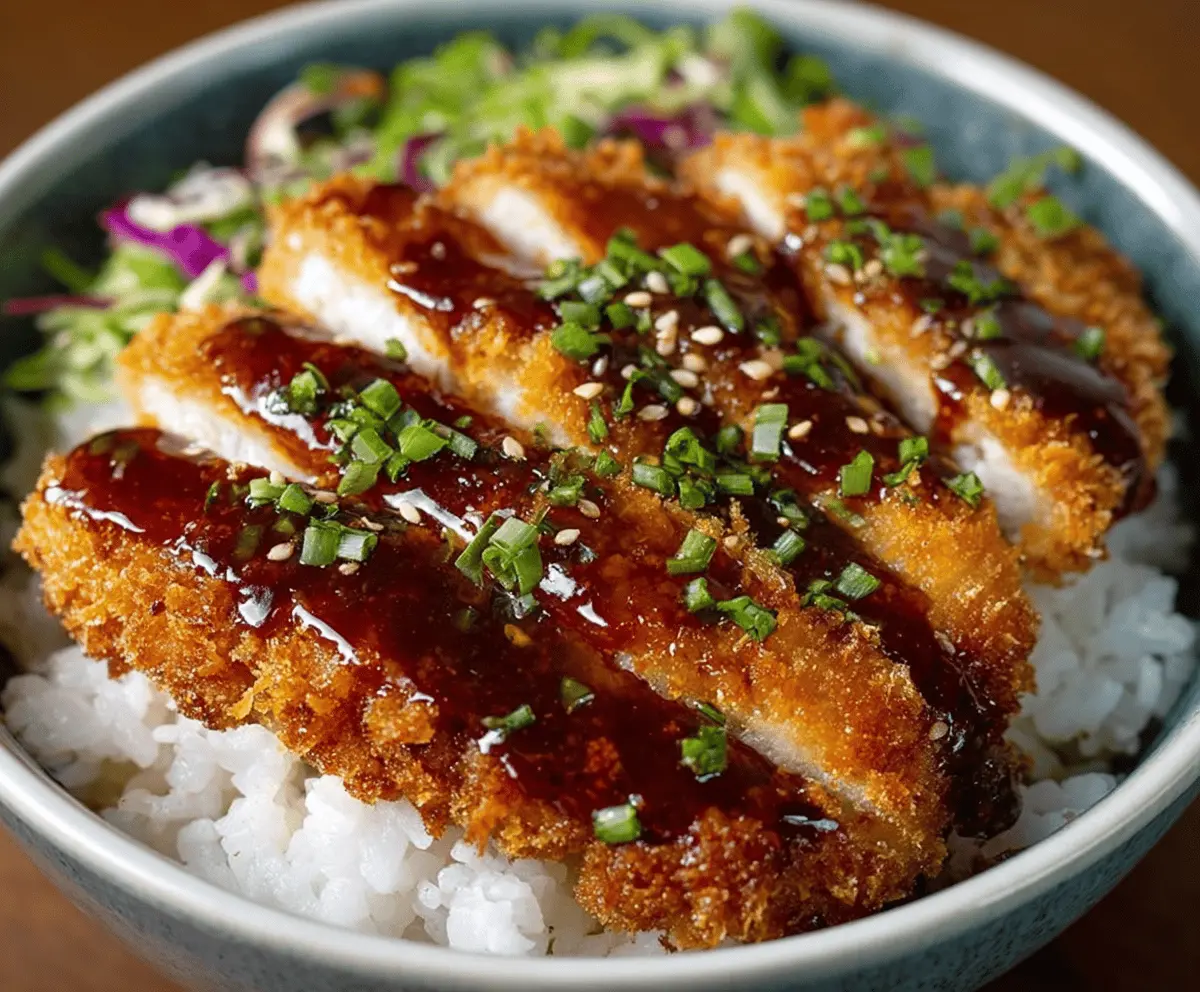
Japanese Katsu Bowls with Tonkatsu Sauce are a delicious mix of crispy breaded pork or chicken served over a bed of fluffy rice. The crunchy katsu pairs perfectly with the rich and slightly sweet tonkatsu sauce that brings everything together. It’s a simple dish that feels special every time you eat it.
I love making these bowls when I want something satisfying but not too complicated. The key is getting the panko coating just right so it stays crunchy under the sauce but still juicy inside. I usually like adding some shredded cabbage or a side of steamed veggies to add a little freshness to the meal.
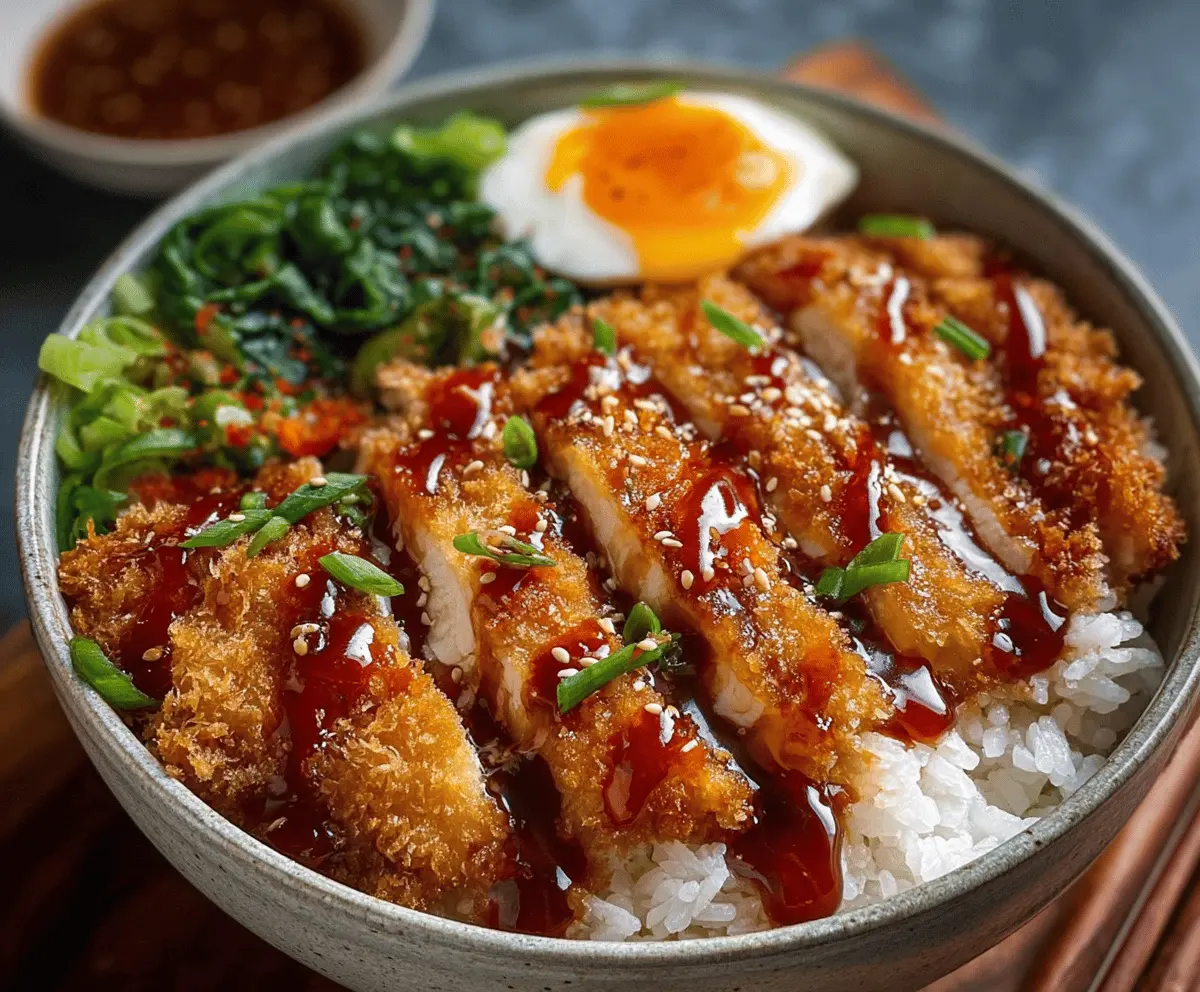
One of my favorite things about these bowls is how easy they are to customize. Sometimes I swap out pork for chicken, or add a fried egg on top for extra yum. It’s a dish that always makes me feel cozy and happy, and it’s perfect for sharing with family or friends around the dinner table.
Key Ingredients & Substitutions
Pork loin or chicken breasts: These are perfect for katsu because they’re lean and cook quickly. You can also use chicken thighs if you want juicier meat.
Panko breadcrumbs: Panko gives that classic crispy texture. If you can’t find panko, crushed cornflakes or regular breadcrumbs can work but won’t be as light and crunchy.
Tonkatsu sauce: It’s a mix of ketchup, Worcestershire, soy sauce, and a bit of sugar. Mirin adds sweetness but you can skip it or add a splash of apple cider vinegar as a substitute.
Rice: Short-grain Japanese rice is best for stickiness. If unavailable, any medium-grain or sticky rice can do.
How Do You Get the Katsu Crispy Without Being Greasy?
Getting the perfect crunch without sogginess is all about oil temperature and coating technique.
- Heat oil to medium (about 350°F or 175°C). The oil should shimmer but not smoke.
- Coat meat in flour first to help the egg stick, then dip in beaten egg.
- Press panko breadcrumbs firmly but don’t overdo it—too thick a layer can get greasy.
- Fry without crowding the pan to keep oil temperature steady.
- Drain on paper towels right after frying to remove excess oil.
Equipment You’ll Need
- Deep frying pan or large skillet — I like using a deeper pan to keep the oil contained and prevent splatters.
- Thermometer — helps you keep the oil at the right temperature for crispy, not greasy, katsu.
- Wire rack or paper towels — perfect for draining the fried katsu so it stays crispy.
- Three shallow bowls — for flour, beaten egg, and panko breadcrumbs, making assembly easier.
- Cooking spoon or tongs — to turn and retrieve the fried meat easily.
Flavor Variations & Add-Ins
- Swap chicken for pork for a leaner version, or try eggplant slices for a veggie twist.
- Add a fried egg on top of the bowl for a richer flavor and extra protein.
- Mix in shredded carrots or sliced cucumber to boost freshness and color.
- Use honey soy sauce instead of traditional tonkatsu sauce for a sweet and savory flavor profile.
Japanese Katsu Bowls with Tonkatsu Sauce
Ingredients You’ll Need:
For the Katsu:
- 2 boneless pork loin chops or chicken breasts (about 1/2 inch thick)
- Salt and pepper, to taste
- 1/2 cup all-purpose flour
- 1 large egg
- 1 cup panko breadcrumbs
- Vegetable oil, for frying
For the Tonkatsu Sauce:
- 1/4 cup ketchup
- 2 tbsp Worcestershire sauce
- 1 tbsp soy sauce
- 1 tbsp mirin (optional)
- 1 tsp sugar
To Serve:
- 2 cups cooked Japanese short-grain rice
- 1 cup shredded cabbage or mixed salad greens
- 2 tbsp chopped green onions
- 1 tsp toasted sesame seeds
How Much Time Will You Need?
This delicious recipe takes about 20 minutes to prepare and cook. You’ll spend around 10 minutes prepping and breading the meat, another 8-10 minutes frying it until golden and crispy, and a few minutes mixing the sauce and assembling your bowl. It’s a quick meal that’s perfect for busy evenings.
Step-by-Step Instructions:
1. Prepare the Meat:
First, trim any extra fat from the pork or chicken. If the pieces are uneven, gently pound them to about 1/2 inch thickness to help them cook evenly. Season both sides with salt and pepper.
2. Set Up Your Breading Stations:
Put the flour in one shallow bowl. Beat the egg well in a second bowl. Spread the panko breadcrumbs evenly in a third bowl. This setup makes breading faster and easier.
3. Bread the Meat:
Coat each piece of meat in flour, tapping off any extra. Then dip it into the beaten egg, making sure it’s completely covered. Finally, press the meat into the panko breadcrumbs until it’s fully coated on all sides.
4. Fry the Katsu:
Heat about 1/2 inch of vegetable oil in a frying pan over medium heat until it shimmers. Carefully add the breaded meat and cook for 3-4 minutes per side, until the outside is golden brown and the meat is cooked through. Remove and let it drain on paper towels to get rid of excess oil.
5. Make the Tonkatsu Sauce:
While the katsu cooks, mix ketchup, Worcestershire sauce, soy sauce, mirin (if using), and sugar in a small bowl. Stir until smooth. Taste and adjust the seasonings if needed.
6. Assemble Your Katsu Bowls:
Slice the fried katsu into strips. Place warm cooked rice in bowls, arrange the katsu slices on top, and drizzle generously with your tonkatsu sauce. Add shredded cabbage or salad greens on the side for freshness.
7. Garnish and Enjoy:
Sprinkle the chopped green onions and toasted sesame seeds over the top for a little extra flavor and crunch. Serve immediately and enjoy your tasty Japanese Katsu Bowls with Tonkatsu Sauce!
Can I Use Frozen Meat for Katsu?
Yes! Just make sure to fully thaw the pork or chicken in the fridge overnight before breading and frying. Pat it dry well to avoid excess moisture, which can make the coating soggy.
What Can I Substitute for Panko Breadcrumbs?
If you don’t have panko, crushed cornflakes or regular breadcrumbs can work in a pinch. Just keep in mind that panko gives the signature light and crispy texture that’s hard to beat.
Can I Make Tonkatsu Sauce Ahead of Time?
Absolutely! The sauce keeps well in an airtight container in the fridge for up to a week. Just give it a good stir before serving to recombine any separated ingredients.
How Do I Store Leftover Katsu Bowls?
Store leftover katsu and rice separately in airtight containers in the fridge for up to 3 days. Reheat the katsu gently in the oven or air fryer to keep it crispy instead of soggy.