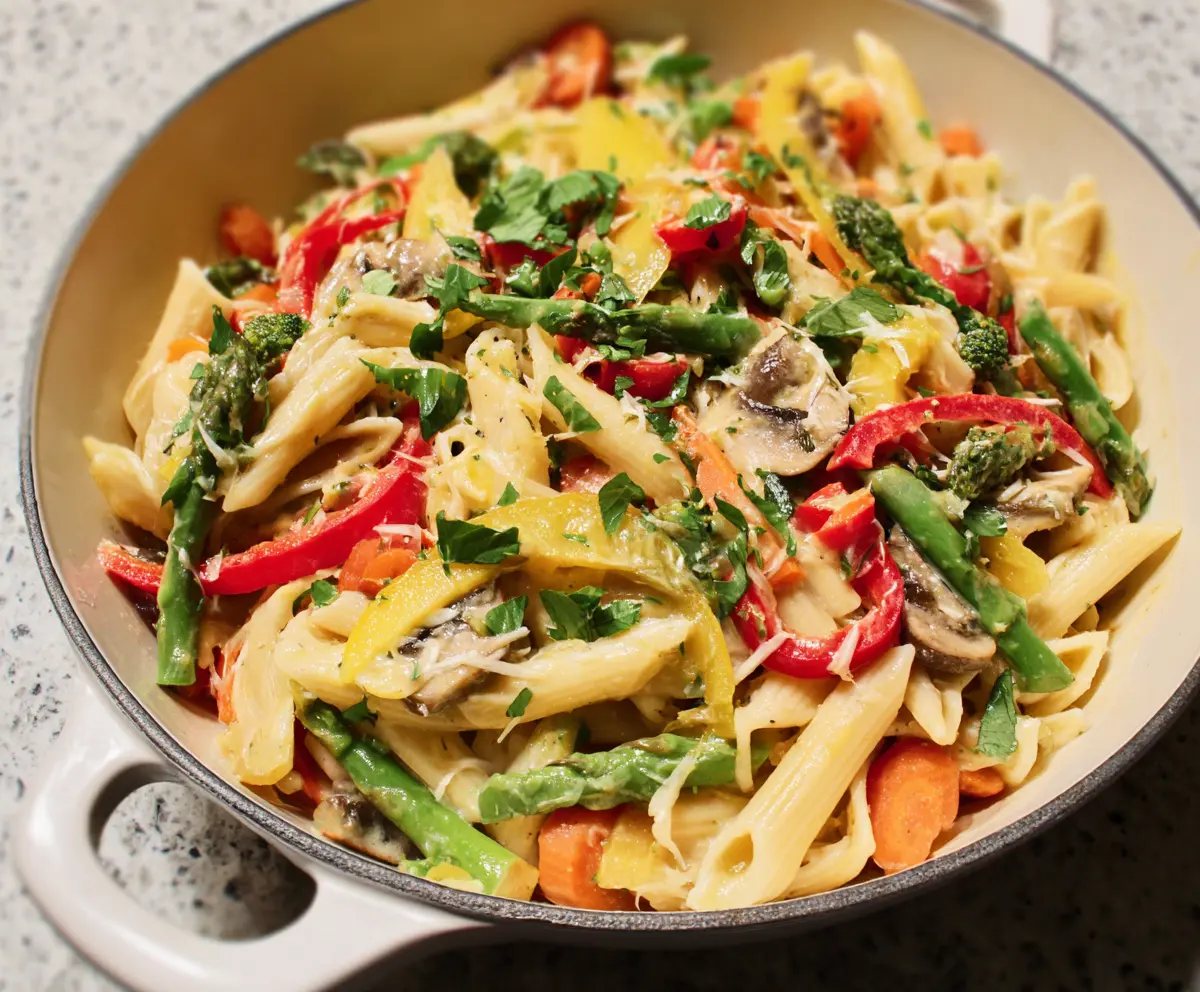
Pasta Primavera is a bright and cheerful dish full of fresh vegetables and tender pasta tossed in a light sauce. Think colorful bell peppers, crisp snap peas, juicy cherry tomatoes, and a sprinkle of fresh herbs, all coming together with perfectly cooked pasta. It’s simple, fresh, and makes you feel good about what you’re eating.
I love making Pasta Primavera when I want something quick but still light and satisfying. The best part is you can use whatever veggies you have on hand, and it feels like springtime on a plate no matter when you make it. I usually add a bit of garlic and lemon zest to lift all the flavors and a touch of Parmesan on top because, well, cheese makes everything better.
For me, Pasta Primavera is the kind of meal that’s easy to share with family or friends, and it always gets compliments even from people who don’t usually ask for veggies. I like to serve it with a crusty piece of bread or a simple green salad, and it’s perfect for a casual dinner or a sunny weekend lunch. It’s a true crowd-pleaser that feels light but still fills you up in all the right ways.
Key Ingredients & Substitutions
Pasta: Penne is great here because its shape holds sauce and bits of vegetables well. But feel free to swap in rigatoni, farfalle, or even spaghetti if that’s what you have.
Vegetables: The mix you use can really change the feel. I love the crunch of asparagus and the sweetness of bell peppers. If you can’t find asparagus, try green beans or zucchini instead—they cook quickly too.
Parmesan Cheese: This adds a nice salty, nutty flavor. If you’re dairy-free, nutritional yeast is a tasty alternative that still gives you that cheesy kick.
Garlic & Olive Oil: These are the simple flavor boosters that bring everything together. Using fresh garlic here is best; garlic powder won’t give you the same rich aroma.
How Do I Keep Vegetables Crisp and Colorful in Pasta Primavera?
Cooking the veggies just right is key for a bright, fresh Pasta Primavera. Here’s a simple way:
- Start by sautéing the hard veggies (carrots and broccoli) first—they take longer to soften.
- Add the medium-cooking ones (asparagus, peppers, mushrooms) a little later.
- Cook everything on medium heat, stirring often to keep the veggies from burning but allowing them to get tender-crisp.
- Don’t overcook! You want them tender but still with a bit of snap and vibrant color.
- If needed, splash a bit of broth to help cook without adding too much oil or fat.
Following these steps helped me get that perfect veggie texture every time, making the dish bright in both taste and look.
Equipment You’ll Need
- Large pot – I use it to cook the pasta easily and in plenty of water.
- Large skillet or sauté pan – perfect for quickly cooking the vegetables and combining everything.
- Colander – to drain the cooked pasta without making a mess.
- Gel or wooden spoon – for stirring the veggies and pasta together smoothly.
- Measuring cups and spoons – helps keep the ingredients just right for the perfect flavor.
- Grater – for freshly grated Parmesan cheese, which adds a nice touch of flavor.
Flavor Variations & Add-Ins
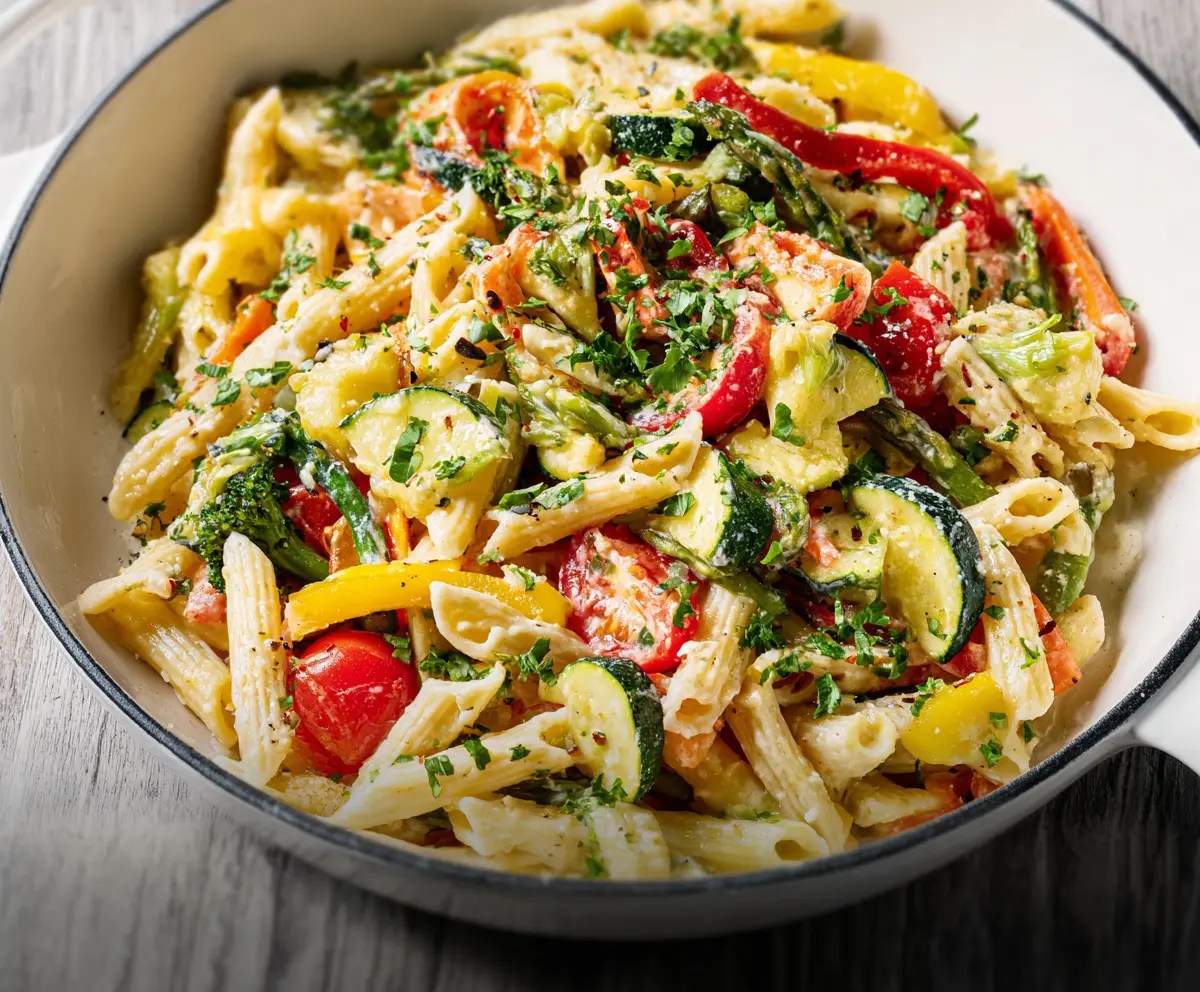
- Swap out vegetables: try zucchini, cherry tomatoes, or spinach for a different twist.
- Add protein: grilled chicken, shrimp, or tofu work well for a heartier dish.
- Replace Parmesan: use feta, goat cheese, or a sprinkle of nutritional yeast for different flavors.
- Spice it up: sprinkle red chili flakes or add a dash of smoked paprika for a smoky kick.
How to Make Pasta Primavera
Ingredients You’ll Need:
- 12 oz penne pasta
- 1 cup asparagus spears, trimmed and cut into 2-inch pieces
- ½ cup red bell pepper, thinly sliced
- ½ cup yellow bell pepper, thinly sliced
- 1 cup carrots, peeled and sliced diagonally
- 1 cup broccoli florets
- 1 cup mushrooms, sliced
- 3 cloves garlic, minced
- 2 tbsp olive oil
- ¼ cup vegetable or chicken broth (optional, for sauce)
- ½ cup grated Parmesan cheese, plus extra for serving
- ¼ cup fresh parsley, chopped
- ¼ tsp red pepper flakes (optional)
- Salt and black pepper to taste
- Juice of half a lemon (optional, for brightness)
How Much Time Will You Need?
This fresh and colorful Pasta Primavera takes about 20 minutes in total. Prep the veggies and pasta, then cook everything together quickly for a vibrant, tender-crisp dish that’s ready in a flash.
Step-by-Step Instructions:
1. Cook the Pasta:
Bring a large pot of salted water to a boil. Add the penne pasta and cook according to package instructions until al dente. Drain the pasta and set it aside while you prepare the veggies.
2. Sauté the Vegetables:
Heat olive oil in a large skillet over medium heat. Add the minced garlic and sauté for about 1 minute until fragrant. Add carrots and broccoli first and cook for 3 minutes, stirring occasionally.
Next, add asparagus, red and yellow bell peppers, and mushrooms. Continue cooking and stirring for 4 to 5 minutes until the vegetables are tender but still crisp. If the skillet looks dry, add a splash of vegetable or chicken broth to help create a light sauce.
3. Combine Pasta and Finish:
Add the cooked penne to the skillet and toss everything together. Remove from heat and sprinkle the grated Parmesan cheese over the pasta and veggies. Add lemon juice if you like a fresh, zesty touch. Toss gently to melt the cheese and coat the pasta evenly.
Season with salt, black pepper, and optional red pepper flakes to taste. Garnish with the chopped fresh parsley and serve warm. Offer extra Parmesan on the side for anyone who wants a bit more cheesy goodness.
Can I Use Different Pasta Shapes for Pasta Primavera?
Absolutely! While penne works great, you can use farfalle, fusilli, or even spaghetti depending on what you have on hand. Just adjust cooking times as needed.
Can I Make Pasta Primavera Ahead of Time?
You can prepare the veggies and cook the pasta in advance, then store them separately in the fridge for up to 2 days. When ready, quickly reheat and toss together for best freshness and texture.
How Should I Store Leftovers?
Store any leftovers in an airtight container in the refrigerator for up to 3 days. Reheat gently on the stove or microwave, adding a splash of broth or water to loosen the sauce if it seems dry.
What Vegetables Can I Substitute or Add?
Feel free to swap in zucchini, cherry tomatoes, green beans, or spinach. Just add them according to their cooking times so they stay crisp and flavorful.